How Long Does Food Last in the Fridge Without Power?
This post contains affiliate links. I earn a small commission if you buy through my links, at no extra cost to you. I only recommend gear I have researched in depth: manufacturer specifications, published teardowns, and aggregated owner reports.
This post contains affiliate links. We earn a small commission if you buy through our links, at no extra cost to you. Specifications come from manufacturer pages and runtimes are calculations, not our own tests.
A moderately stocked refrigerator and freezer hold several hundred dollars of food. An extended outage can cost a household all of it.
Usually not because the storm destroyed the food, but because the rules are not widely known. People open the refrigerator too many times. They wait too long to move things to a cooler. They assume that something is probably fine.
None of it was probably fine. And food poisoning during a disaster — when hospitals may be overwhelmed and you’re already stressed — is a serious risk.
This guide gives you the exact timelines, food-by-food breakdown, and practical strategies that protect a food supply during power outages. For the full outage survival plan, see what to do during a power outage and emergency power at home.
⚠️ The Core Rule: 4 Hours, 40°F, When in Doubt
Everything in food safety during a power outage comes back to three numbers:
- 4 hours — how long a closed refrigerator stays safe
- 40°F — the maximum safe temperature for refrigerated food
- When in doubt, throw it out — the rule that prevents food poisoning
Bacteria that cause food poisoning (Salmonella, E. coli, Listeria) multiply rapidly between 40°F and 140°F — what the USDA calls the “danger zone.” Your refrigerator normally keeps food at 35–38°F. Once power goes out, that temperature starts rising.
⏰ Refrigerator: The 4-Hour Window
A closed refrigerator maintains safe temperature for approximately 4 hours after power loss.
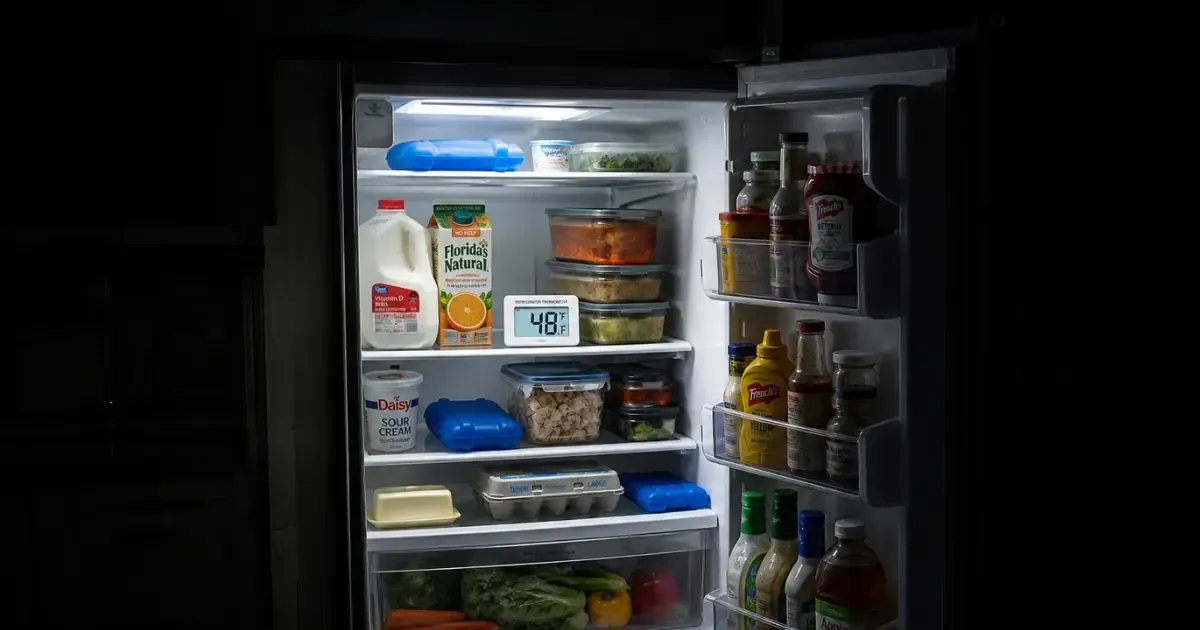
The critical word is closed. Every time you open the refrigerator, warm air enters and accelerates the temperature rise. In a multi-day outage, refrigerator temperature rises predictably. After 4 hours of staying closed, it was at 41°F — just above the safety threshold. After each opening, it climbed faster.
The practical strategy:
- Decide what you need from the refrigerator before opening it
- Get everything at once
- Keep it closed except for essential access
How to extend refrigerator safety beyond 4 hours
Method 1: Add ice Place bags of ice or frozen gel packs inside the refrigerator. Pre-frozen water bottles work well. This can extend food safety by 12–24 hours depending on how much ice you add and how well-insulated your refrigerator is.
Method 2: Solar generator backup A solar generator running the refrigerator extends food safety for as long as the battery or the sun lasts. A 1,000Wh-class power station has about 850Wh usable, which runs a refrigerator averaging 60W for roughly 14 hours. A 200W solar panel adds about 750Wh on a good sun day, roughly half a fridge’s daily use, so it stretches the runtime rather than guaranteeing it.
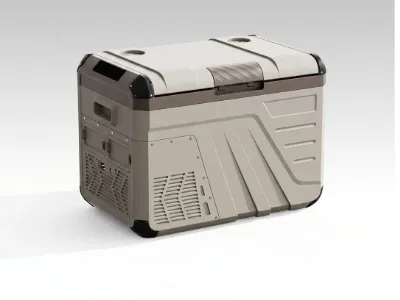
🏆 Quick Comparison: Solar Generators That Save Your Food
| Model | Capacity | Output | Best For |
|---|---|---|---|
| EcoFlow DELTA 3 Plus | 1,024Wh | 1,800W (3,600W surge) | Refrigerator, about 14 hours at 60W average |
| Jackery Explorer 1000 V2 | 1,070Wh | 1,500W (3,000W surge) | Refrigerator, about 15 hours at 60W average |
| Bluetti Elite 200 V2 | 2,073.6Wh | 2,600W | Fridge + freezer, about 19 hours at 90W combined |
Method 3: Move to a cooler Transfer the most perishable items to a quality cooler with ice. A well-packed cooler with sufficient ice can keep food safe for 48–72 hours.
❄️ Freezer: 24–48 Hours
A freezer holds temperature significantly longer than a refrigerator because the temperature differential is much larger — your freezer is at 0°F versus the ambient temperature.
| Freezer Status | Safe Duration |
|---|---|
| Full freezer | 48 hours |
| Half-full freezer | 24 hours |
| Nearly empty | 12–18 hours |
The trick: Keep your freezer as full as possible before hurricane season. If you have empty space, fill it with water bottles. This acts as thermal mass — absorbing heat slowly and extending your safe window.
Important: Frozen food that has thawed to above 40°F should not be refrozen. If ice crystals remain and temperature is still below 40°F, refreezing is generally safe but quality will suffer.
📋 Food-by-Food Safety Guide
Refrigerator items — what survives and what doesn’t
THROW AWAY after 4 hours above 40°F:
- Raw or cooked meat, poultry, seafood
- Milk, cream, yogurt, soft cheese
- Cooked pasta, cooked rice, cooked potatoes
- Cooked casseroles, stews, soups
- Custards, puddings, any egg-based dish
- Opened mayonnaise (discard after 8 hours above 50°F)
- Cut fruits and vegetables
- Cooked beans and legumes
- Leftover pizza
USUALLY SAFE for days even without power:
- Hard cheeses (cheddar, parmesan, romano) — safe for days
- Whole, uncut fruits and vegetables
- Fruit juices (opened)
- Peanut butter, jelly, jam
- Ketchup, mustard, relish, hot sauce
- Vinegar-based salad dressings
- Bread, rolls, cakes, muffins (no custard filling)
- Butter and margarine — safe for days at room temperature
- Fruit pies
- Fresh herbs
Freezer items — safe if ice crystals remain
SAFE TO REFREEZE (if still contains ice crystals or temperature below 40°F):
- Vegetables and fruit — safe but quality decreases
- Bread and pastries
- Fruit juice concentrates
- Hard cheeses
DISCARD if above 40°F for more than 2 hours:
- Meat, poultry, seafood
- Milk, cream, soft cheeses
- Eggs (out of shell), egg products
- Ice cream and frozen yogurt — discard if above 40°F at all
- Casseroles, stews, pasta with meat
🌡️ The Thermometer Rule
The only reliable way to know whether your food is safe is a food thermometer.
A refrigerator thermometer (not a meat thermometer — a refrigerator/freezer thermometer) placed in the middle shelf of your refrigerator tells you the actual temperature. If it reads below 40°F, food is safe regardless of how long the power has been out. If it reads above 40°F, apply the time guidelines above.
Cost: $8–$15 at any grocery or hardware store. Worth every cent.
🆕 New: BLUETTI FridgePower — Built Specifically for This Problem
BLUETTI just launched a portable power station designed exactly for the scenario in this article: keeping your fridge running during an outage. It's an ultra-slim 75mm design that tucks behind or beside your refrigerator, switches to backup power automatically (instant UPS-style failover), and runs quieter than a generator. If you only need fridge backup — not a full whole-home setup — this is a purpose-built option for fridge-only backup.
See BLUETTI FridgePower →🛡️ Practical Strategies to Protect Your Food Supply
Before an outage (during hurricane season prep):
- Freeze water bottles to fill empty freezer space — thermal mass extends safe window
- Set refrigerator to coldest setting 24 hours before a forecast storm
- Move refrigerator temperature to 33–35°F to buy extra time before the danger zone
- Keep a cooler and ice in your garage during peak hurricane season
- Stock a 7-day non-perishable food supply so refrigerator loss isn’t a crisis
During an outage:
- Keep refrigerator and freezer closed — this is the single most important action
- Use a thermometer to monitor actual temperature
- Move perishables to a cooler with ice at the 3-hour mark if no backup power
- Cook and eat perishables (using gas stove or outdoor grill) before they reach the danger zone
- Run your solar generator during daylight hours to keep the refrigerator running
After power returns:
- Check temperature before consuming any refrigerated food
- When in doubt, throw it out — the cost of replacing food is far less than the cost of food poisoning
- Document losses for insurance claims if the outage was disaster-related
💰 What a Full Refrigerator Is Actually Worth
Here is an illustrative household loss. The prices are rough US grocery estimates, so use your own:
- 2 lbs ground beef: $14
- 6 chicken breasts: $18
- 1 lb shrimp: $12
- Various deli meats: $22
- Full dairy section: $35
- Leftovers and cooked food: $45
- Condiments of uncertain safety: $28
- Frozen meals and meat: $166
That comes to roughly $340. The frozen section alone is nearly half of it, which is why the 48-hour freezer window is the number most worth protecting.
A mid-range solar generator runs $600 to $900.
The math is simple: for a household in a hurricane-prone area that cooks at home regularly, two or three avoided losses on this scale cover the purchase.
✅ When Power Returns: Food Safety Checklist
✅ Check refrigerator temperature with thermometer — must be 40°F or below ✅ Check freezer — if food still has ice crystals and is below 40°F, generally safe ✅ Discard any food with unusual odor, color, or texture ✅ When in doubt, throw it out — do not taste-test to determine safety ✅ Clean refrigerator and freezer with baking soda solution before restocking ✅ Document discarded food for potential insurance reimbursement
🥫 Emergency Food Alternatives
Once your refrigerator food is gone, you need a food plan that doesn’t require power. A 7-day no-refrigeration meal framework:
Breakfast: Instant oatmeal (hot water from camp stove), peanut butter on crackers, granola bars Lunch: Canned tuna or chicken with crackers, peanut butter and jelly sandwich, trail mix Dinner: Canned beans and rice (camp stove), canned soup, canned pasta
For a complete 7-day no-refrigeration meal plan with exact calorie counts and shopping list, the 72-Hour Power Outage Survival Kit includes everything pre-planned.
🔋 72-Hour Power Outage Survival Kit — $27
7-day no-fridge meal plan + printable food safety guide + solar generator sizing calculator.
Get the Kit — $27 →Four hours is not much. Here is how to buy more.
The clock only starts when the power stops — but a freezer that keeps running never starts it at all. A mid-size chest freezer needs about 1,100–1,200W of surge headroom to start on backup power, which is where most units fail.
See which generators actually start a chest freezer →
Freezer wattage by size → · How long outages really last → · Why surge watts decide everything →
📚 More Guides to Help You Prepare
- Chest freezer wattage chart: running and surge watts
- How much emergency water to store
- How to charge a solar generator without sun
- Solar generators for camping, including 12V fridge-freezers
- EcoFlow vs Bluetti compared
❓ Frequently Asked Questions
How long does food last in the refrigerator without power?
A closed refrigerator keeps food safe for approximately 4 hours after power loss. The key word is closed — every time you open the door, warm air enters and the temperature rises faster. After 4 hours, perishable items like meat, dairy, and cooked food should be discarded or moved to a cooler with ice. Non-perishable refrigerator items like hard cheese, butter, whole fruits and vegetables, and condiments are generally safe for much longer.
Is it safe to eat food that was in the fridge during a power outage?
It depends on how long the power was out and whether the temperature stayed below 40°F. If the power was out for less than 4 hours and the refrigerator stayed closed, food is generally safe. Use a refrigerator thermometer to check the actual temperature — if it’s above 40°F and has been for more than 2 hours, discard perishables. Never taste food to determine safety — some bacteria that cause illness have no detectable odor or taste.
How long does meat last in the fridge without power?
Raw and cooked meat should be discarded after 4 hours above 40°F. This includes beef, pork, poultry, and seafood. If you have a full freezer, meat stored there is safe for 48 hours in a full freezer, 24 hours in a half-full freezer. The safest strategy is to cook meat on a gas stove or outdoor grill as soon as an extended outage is confirmed.
What foods can I keep after a power outage?
Foods that are generally safe after an extended power outage include: hard cheeses, butter, whole fruits and vegetables, opened fruit juices, peanut butter, jelly, jam, ketchup, mustard, vinegar-based dressings, bread, and fresh herbs. These items have low water activity or high acidity that inhibits bacterial growth. When in doubt about any specific item, throw it out.
How do I keep food cold during a power outage without a generator?
Place bags of ice, frozen gel packs, or pre-frozen water bottles inside the refrigerator to extend cold time. A well-stocked cooler with block ice (not cubed — it lasts longer) can keep food safe for 48–72 hours. Keep the cooler in the coolest part of your home, minimize opening it, and pre-chill it before the storm by placing frozen items inside.
Does a full freezer really stay frozen longer?
Yes — a full freezer acts as thermal mass, absorbing heat more slowly than an empty one. A completely full freezer maintains safe temperature for approximately 48 hours; a half-full freezer for about 24 hours. This is why we recommend filling empty freezer space with water bottles before hurricane season — they cost nothing and significantly extend your food safety window.
Can I refreeze food that thawed during a power outage?
Only if the food still contains ice crystals and its temperature is below 40°F. If the food has fully thawed but stayed below 40°F (confirmed by thermometer), it can generally be refrozen but quality will suffer. If the food was above 40°F for more than 2 hours, do not refreeze — discard it. For meat, poultry, and seafood, err on the side of caution and discard if you’re uncertain.
How long does a freezer stay cold without power?
A full freezer maintains safe temperature (0°F) for approximately 48 hours after power loss. A half-full freezer stays safe for about 24 hours. These times assume the freezer door stays closed. Adding dry ice extends these times significantly — 25 lbs of dry ice can keep a full 10 cubic foot freezer frozen for 3–4 days.
Temperature loss rates follow USDA and FoodSafety.gov guidance. Solar generator figures are calculated from rated capacity and typical appliance draws, not measured. Last updated October 2026.
🎒 SurviveX 72-Hour Emergency Kit
Pre-assembled food, water purification, first aid, and communication gear — built for real outages, not just camping weekends.
📦 Free shipping on orders $50+ · 10% off your first order when you sign up
Check SurviveX Kit →