Why I Ditched Gas Generators: Top 2 Solar Power Stations
This post contains affiliate links. I earn a small commission if you buy through my links, at no extra cost to you. I only recommend gear I have personally tested.
As a homeowner, there is absolutely nothing worse than the exact moment the power goes out during a severe winter storm or extreme heatwave. You hear the sudden silence as the HVAC unit shuts down, your fridge starts getting warm, the Wi-Fi dies, and you are left sitting in the dark hoping the grid operators can bring the system back online before your pipes freeze or your house reaches 90 degrees.
With recent data showing ERCOT’s winter reserve margins dropping dangerously low and California’s PG&E expanding their Public Safety Power Shutoff (PSPS) protocols, regional grid vulnerability is no longer a hypothetical scenario. It is a mathematical certainty. If you are relying on an aging infrastructure to keep your family safe, you are playing a very dangerous game of roulette. Check your state’s specific grid vulnerabilities and local threats here.
🚨 The Hidden Danger of the "Gas Trap"
For decades, the standard response was to buy a traditional gas-powered generator. But after running a comprehensive financial audit on emergency backup power systems, I realized gas generators are a massive money trap disguised as a safety net.
Gasoline goes bad. If you buy ten gallons of fuel and let it sit in your garage for a year without stabilizers, it will degrade and gum up your generator’s carburetor. More importantly, during a massive state-wide grid failure, gas stations lose power too. Once your stored supply runs dry, your generator becomes a very heavy lawn ornament.
That is why I abandoned combustion engines and switched to modern Portable Solar Power Stations. They produce zero emissions, operate in total silence, require absolutely zero engine maintenance, and can safely run your critical appliances right from the center of your living room.
🧮 What is "Blackout Math"? (Surge vs. Running Watts)
Before you buy a solar battery, you have to understand the hard physics of home electricity. I call this “Blackout Math.” Most homeowners buy a cheap battery and instantly break it because they didn’t account for the difference between Running Watts and Surge Watts.
- ❄️ Full-Size Refrigerator: Pulls about 150W running, but requires a massive 600W to 800W surge to start the compressor.
- 🔥 Space Heater / Portable AC: These are energy vampires. They pull a continuous, punishing 1,500W of running power.
- 💧 Well Pump: Pulls around 1,000W running, but requires a violent 3,000W surge.
If you strictly run a high-efficiency fridge and your Wi-Fi router, a standard 2kWh battery will easily last you 10 to 12 hours. However, the moment you plug in a standard 1,500W space heater, that exact same battery will be completely dead in 1.2 hours. You must buy a system properly sized for your specific emergency load.
⚡ Don’t want to do the math yourself? Stop guessing and risking your gear. Use our Free Local Grid Audit tool to calculate your exact home surge requirements and see what systems work for your zip code.
⚔️ Head-to-Head: EcoFlow vs. Jackery
If you are looking for “Level 1” resilience to confidently survive a 12-to-24-hour grid failure, here is how the top two units compare in real-world blackout conditions:
| Feature | EcoFlow Delta Pro 3 | Jackery Explorer 2000 Plus |
|---|---|---|
| Best For | Whole-room backup & heavy appliances | Rugged mobility & ease of use |
| Battery Capacity | 4,096 Wh (Massive) | 2,042 Wh |
| AC Output (Running) | 4,000W | 3,000W |
| Expandability | Up to 12,000 Wh | Up to 12,000 Wh |
| Charge Time (Wall) | ~2.5 Hours ⚡ | ~2 Hours ⚡ |
1. 🧠 The "Smart Tech" Choice: EcoFlow DELTA Pro 3
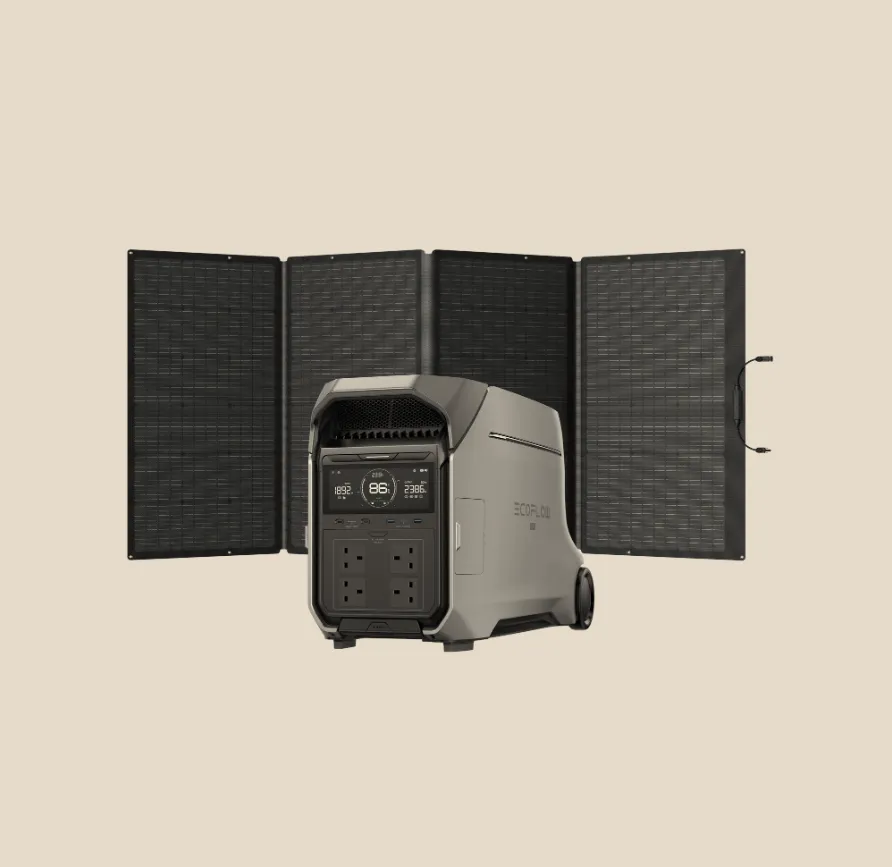
The EcoFlow Delta Pro 3 is the undisputed heavyweight champion of the portable market. It is designed for the homeowner who refuses to compromise on capacity. With a peak output pushing past 4,000W, it won’t just run your fridge—it can easily handle the 3,000W surge of a well pump without tripping the breakers. If you realize 4kWh isn’t enough, you can daisy-chain extra smart batteries to push the system up to a staggering 12kWh of total storage.
🛒 Check Current Price on Amazon ➔
2. 🛻 The "Rugged Reliability" Choice: Jackery 2000 Plus
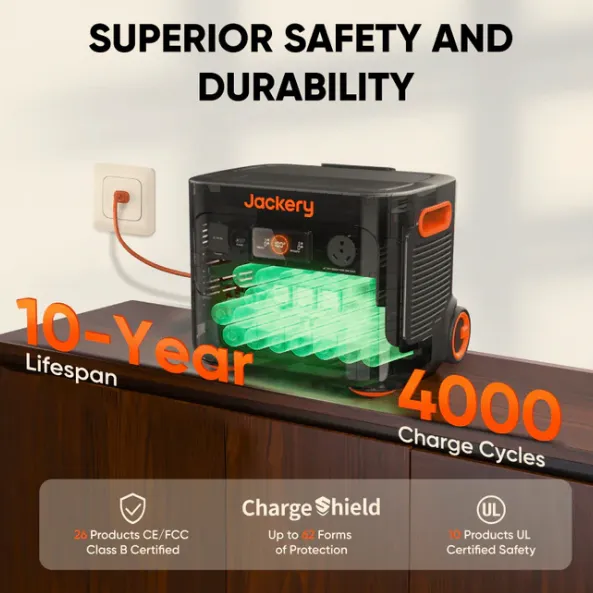
If EcoFlow is a luxury sports car, the Jackery 2000 Plus is an indestructible off-road truck. Jackery has moved to advanced LiFePO4 battery chemistry, meaning you can drain and recharge this unit thousands of times over a decade without degrading the battery health. It is built for the user who wants zero software headaches and features built-in wheels and ergonomic handles making it incredibly easy to roll around when the lights go out.
🛒 Check Current Price on Amazon ➔
⚠️ The Hard Truth: When Portable Batteries Fail
Here is the uncomfortable reality most marketers refuse to tell you: Jackery and EcoFlow units are incredible machines, but they are strictly Level 1 resilience. They will save your groceries, but they cannot run a central air conditioning unit or electric furnace during a multi-day grid collapse.
For true, multi-day grid failures, you must advance to a Level 3 System—a fully integrated solar array and battery reserve wired directly into your home's main electrical panel. Stop guessing what your home actually needs.
📍 Check Your Local Grid Threat & Request a Home Audit🤔 The "Blackout Prep" FAQ
Before you make a final decision, let's clear up the three most common questions I get from homeowners trying to figure out this whole off-grid thing.
Can a portable solar station run a central air conditioner?
The short answer? No. The realistic answer? You are asking a golf cart to pull a freight train. A standard 3-ton central AC