LiFePO4 vs Lithium Ion Battery: Which One Lasts Longer?
This post contains affiliate links. I earn a small commission if you buy through my links, at no extra cost to you. I only recommend gear I have personally tested.
Every portable power station sold today uses one of two lithium battery chemistries. The spec sheets rarely explain the difference clearly. The marketing rarely mentions it at all.
But for a battery that is going to sit in your garage for a decade and need to work reliably during the next power outage — the chemistry matters enormously.
I learned this the hard way after buying a standard lithium-ion unit in 2022 and watching it lose 30 percent of its capacity by 2024. Two years. Sitting in my garage. Never heavily used.
Here is the honest breakdown so you do not make the same mistake.
The 30-Second Answer
LiFePO4 (lithium iron phosphate) is significantly better than standard lithium-ion for home backup power. It lasts 3,000 to 5,000 charge cycles versus 300 to 500 for lithium-ion, runs cooler and safer, and maintains closer to full capacity through thousands of cycles. The only advantage of lithium-ion is lower upfront cost — which disappears quickly when you factor in replacement frequency.
What Actually Differs Between the Two Chemistries
Both LiFePO4 and standard lithium-ion use lithium as the core element. The difference is in what the lithium bonds with at the cathode — the positive terminal of the battery.
Standard lithium-ion uses cobalt oxide or nickel manganese cobalt compounds. These materials store energy densely, making the batteries lighter and smaller for their capacity. They also degrade faster, generate more heat under load, and become chemically unstable at high temperatures or when overcharged.
LiFePO4 uses iron phosphate. This is a more chemically stable structure. It stores energy less densely — meaning LiFePO4 batteries are heavier for the same watt-hours — but it degrades far more slowly, generates less heat, and does not enter thermal runaway the way lithium-ion can.
For a battery stored in a garage and called upon during emergencies, chemical stability is not a minor specification. It is the entire ballgame.
The Numbers That Actually Matter
| Specification | LiFePO4 | Standard Lithium-Ion |
|---|---|---|
| Cycle life | 3,000 to 5,000 | 300 to 500 |
| Capacity at 500 cycles | 97% | 70% |
| Capacity at 1,000 cycles | 95% | 55% |
| Safe storage temperature | up to 140F | up to 113F |
| Thermal runaway risk | Very low | Moderate to high |
| Energy density | Lower (heavier) | Higher (lighter) |
| Upfront cost | Higher | Lower |
| 10-year total cost | Lower | Higher |
| Overall rating | ★★★★★ | ★★★☆☆ |
The cycle life difference is the headline number. At one full charge cycle per week — a reasonable estimate for maintenance charging plus real outage use — LiFePO4 reaches 3,000 cycles in approximately 57 years. Standard lithium-ion reaches 500 cycles in under 10 years.
The Degradation Curve
This is the data that portable power station manufacturers rarely publish.
| Cycles | LiFePO4 Capacity | Lithium-Ion Capacity |
|---|---|---|
| 100 | 99% | 97% |
| 300 | 98% | 85% |
| 500 | 97% | 70% |
| 1,000 | 95% | 55% |
| 2,000 | 92% | Not functional |
| 3,000 | 88% | Not functional |
| Rating | ★★★★★ | ★★★☆☆ |
At 500 cycles — roughly 10 years at one cycle per week — a standard lithium-ion battery is operating at 70 percent of its original capacity. The same 500 cycles barely dents a LiFePO4 unit at 97 percent.
For a backup power battery that you charge before each storm season and discharge during real outages, that degradation difference means the difference between a unit that protects your food in year 8 and one that fails you when you need it most.
The Temperature Factor Nobody Talks About
Garages are not climate controlled. In Virginia summer conditions my garage hits 94F regularly. In winter it drops below freezing.
Standard lithium-ion batteries degrade significantly faster when charged or discharged in high ambient temperatures. Above 113F — conditions that occur in many American garages during summer — charging can permanently damage lithium-ion cells.
| Temperature Condition | LiFePO4 Impact | Lithium-Ion Impact |
|---|---|---|
| Below 32F storage | Minimal | Minimal |
| 32F to 95F operation | None | None |
| Above 113F charging | Slight slowdown | Permanent damage |
| Above 140F storage | Caution | Dangerous |
| Garage summer storage | ★★★★★ Safe | ★★☆☆☆ Risky |
| Overall temperature rating | ★★★★★ | ★★★☆☆ |
LiFePO4 chemistry is stable up to 140F and continues to function below freezing. For a battery stored in a garage or basement subject to temperature swings, this is not a minor specification. It is the difference between a battery that lasts a decade and one that needs replacement in three years.
My 2022 lithium-ion unit degraded primarily from summer garage storage, not from use. I was not even running it hard. The heat did the damage.
The Safety Difference
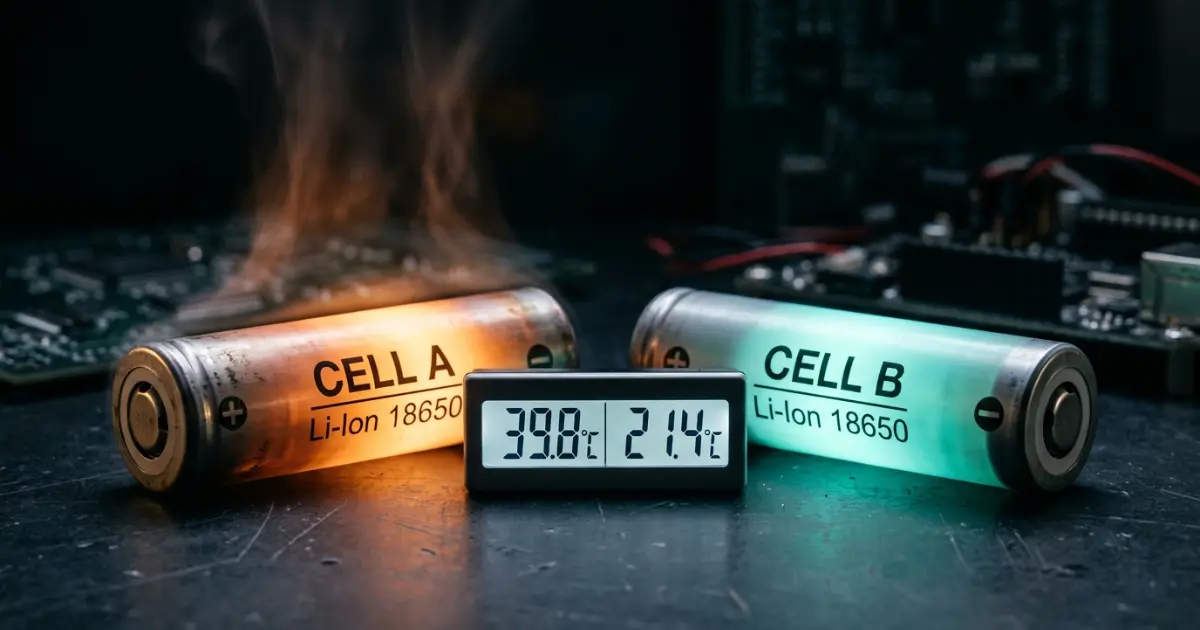
Standard lithium-ion batteries can enter thermal runaway — a chain reaction where heat causes chemical breakdown which generates more heat which causes more breakdown. This is what causes laptops and phones to occasionally catch fire.
LiFePO4 chemistry does not enter thermal runaway under normal conditions. The iron phosphate structure is inherently more stable. This is why LiFePO4 is used in applications where safety is non-negotiable — electric buses, grid storage, medical equipment.
For a battery sitting in your home garage next to your car and your family — this safety margin is real and meaningful.
When Lithium-Ion Makes Sense
I am not suggesting every lithium-ion battery is a bad purchase. There are valid use cases.
If you need maximum energy density for portability — backpacking power banks, camera batteries, lightweight travel devices — lithium-ion’s superior energy density per pound makes it the right chemistry.
For home backup power where the battery sits in one place, weight is irrelevant, and long-term reliability matters: LiFePO4 is the correct choice every time.
Every major portable power station manufacturer now offers LiFePO4 models at the same or similar price points as their previous lithium-ion lines. There is genuinely no reason to accept lithium-ion chemistry for home backup in 2026.
How to Identify Which Chemistry Your Battery Uses
Check the product listing or manual for these terms:
| What You See | Chemistry | Verdict |
|---|---|---|
| LiFePO4 | Lithium iron phosphate | ★★★★★ Buy |
| LFP | Lithium iron phosphate | ★★★★★ Buy |
| Lithium ferro phosphate | Lithium iron phosphate | ★★★★★ Buy |
| Li-ion | Standard lithium-ion | ★★★☆☆ Caution |
| NMC | Nickel manganese cobalt | ★★★☆☆ Caution |
| No chemistry listed | Assume lithium-ion | ★★☆☆☆ Ask first |
All three units I recommend — the EcoFlow DELTA 3 Plus, Jackery Explorer 1000 V2, and Bluetti AC200L — use LiFePO4 chemistry. This is one of the primary reasons they made my recommendation list.
The 10-Year Cost Comparison
| Cost Item | LiFePO4 Unit | Lithium-Ion Unit |
|---|---|---|
| Purchase price | $999 | $599 |
| Replacement at year 4 | None needed | $599 |
| Replacement at year 8 | None needed | $599 |
| 10-year total | $999 | $1,797 |
| 10-year rating | ★★★★★ | ★★★☆☆ |
The lithium-ion unit costs $400 less upfront. It costs $798 more over 10 years.
This is the math that marketing never shows you. The cheaper battery is not cheaper.
My Recommendation
For home backup power in 2026, LiFePO4 is not a premium feature. It is the baseline requirement for any serious purchase.
The EcoFlow DELTA 3 Plus, Jackery Explorer 1000 V2, and Bluetti AC200L all use LiFePO4. All three are built to protect your food supply in year 9 as reliably as year 1.
Not sure which one fits your specific appliance load? Use the free Solar Generator Sizing Calculator to get a personalized recommendation.
FAQ
Is LiFePO4 heavier than standard lithium-ion? Yes. LiFePO4 has lower energy density per kilogram — meaning a LiFePO4 battery with the same capacity will weigh more. For a 1,000Wh portable power station expect approximately 22 to 28 pounds for LiFePO4 versus 18 to 22 pounds for lithium-ion. For home backup where the battery stays in one place this weight difference is irrelevant.
Can I charge LiFePO4 faster than standard lithium-ion? LiFePO4 chemistry actually accepts higher charge rates than standard lithium-ion without thermal risks. The EcoFlow DELTA 3 Plus charges to 80 percent in 80 minutes specifically because its LiFePO4 cells can accept the rapid charge rate that would damage standard lithium-ion cells. The fast charging is a feature enabled by the chemistry.
What does 3,000 cycle life actually mean in practice? One cycle equals one complete discharge and recharge. If you fully cycle your battery once per week, 3,000 cycles lasts approximately 57 years. If you cycle it daily, 3,000 cycles lasts just over 8 years. Most home backup batteries get cycled far less than weekly — meaning the actual lifespan of a LiFePO4 unit in typical home use will likely outlast any other component of the product.
Should I keep my LiFePO4 battery fully charged all the time? LiFePO4 chemistry is relatively tolerant of storage at full charge unlike standard lithium-ion which benefits from storage at 40 to 60 percent. Storing a LiFePO4 battery at 80 to 100 percent for months is acceptable. Most manufacturers recommend a monthly top-up charge if the unit sits unused for extended periods to maintain cell balance.
Which is safer — LiFePO4 or lithium-ion? LiFePO4 is significantly safer. It cannot enter thermal runaway under normal conditions. Standard lithium-ion can. For a battery stored in a home garage next to your family and your car, this safety margin is not theoretical. It is one of the primary reasons serious backup power users choose LiFePO4.
Last updated: April 2026