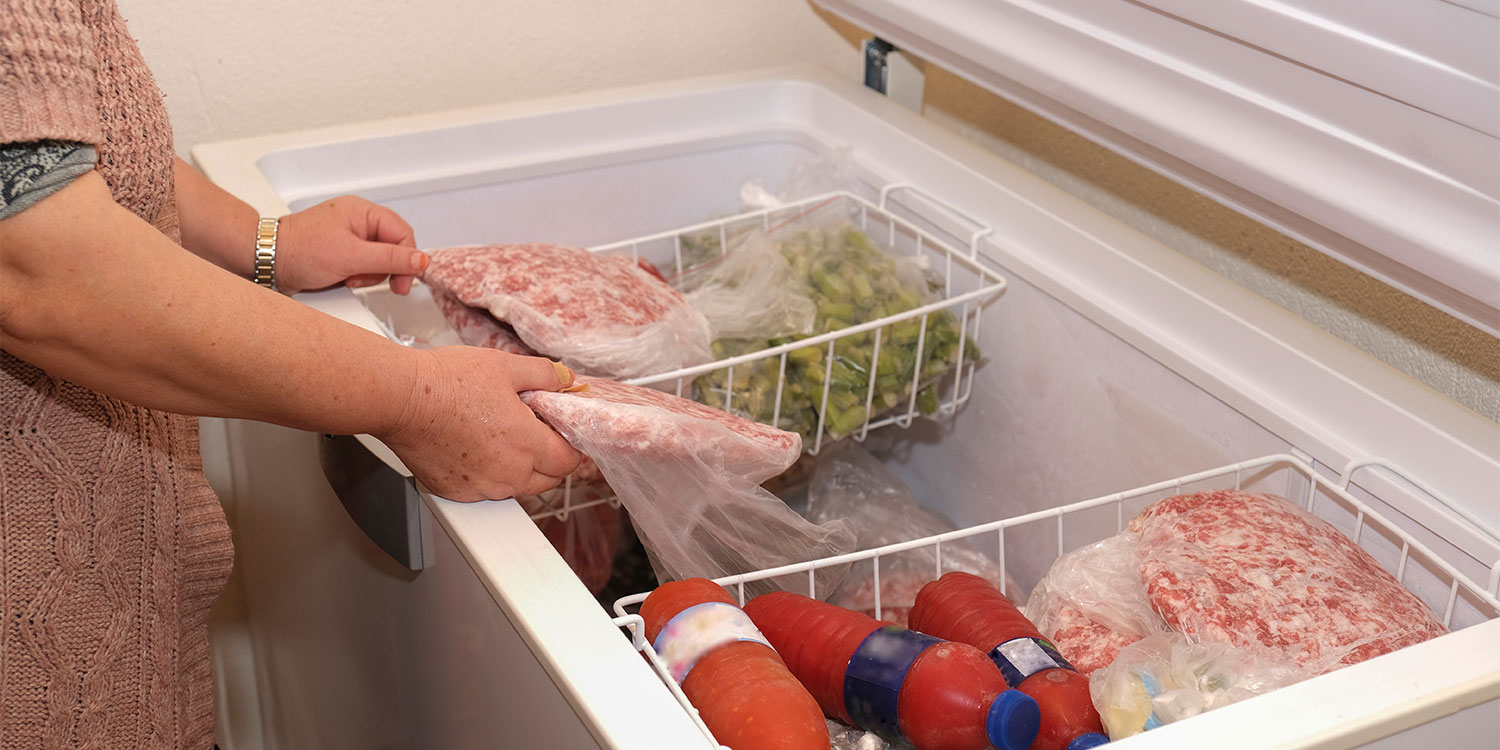
Power Outage Food Safety: How Long Does a Freezer Last?
This post contains affiliate links. I earn a small commission if you buy through my links, at no extra cost to you. I only recommend gear I have personally tested.
How Long Will a Freezer Keep Food Safe Without Power?
⚡ The Quick Answer: A completely full chest freezer keeps food safe for up to 48 hours without power if the lid stays sealed and ambient temperatures are moderate. A half-full freezer cuts that to roughly 24 hours. An upright freezer of the same size performs significantly worse because cold air falls out every time the door opens. The 40°F threshold is your critical number — once food crosses that temperature, you have 2 hours before it becomes unsafe.
This question matters more than most people realize until it is too late.
I have seen the answer on dozens of prepper blogs and emergency preparedness websites. They all say the same thing: “48 hours.” What none of them explain is that the 48-hour number is a best-case figure that assumes conditions most people do not have during a real outage.
A completely full freezer. A perfectly sealed lid. No one opening it to check on things. Moderate ambient temperature. Every variable optimized.
Change any one of those conditions and your window shrinks considerably.
Here are the real numbers — and more importantly, the free actions that can push even a half-full freezer past 40 hours of safety time.
💡 Why Frozen Food Stays Cold at All
Understanding this helps everything else make sense.
Your chest freezer keeps food frozen by maintaining an internal temperature at or below 0°F. When power cuts, the compressor stops — but the frozen food itself becomes a massive thermal battery that keeps everything cold.
Frozen food is essentially ice. And ice has remarkable thermal mass — it absorbs an enormous amount of heat energy before its temperature changes. Two hundred pounds of frozen beef, vegetables, and frozen water is essentially a giant cold pack that keeps the internal temperature below freezing long after the compressor stops running.
The physics are simple: more frozen mass means more cold stored, which means more time before the temperature rises above the danger zone.
This is why a full freezer lasts twice as long as a half-empty one. It is not magic — it is thermal physics working in your favor.
📊 The Real Timeline: Hour by Hour
These figures assume a typical residential chest freezer, lid kept sealed, ambient temperature between 65°F and 75°F:
| Hours Without Power | Full Freezer | Half-Full Freezer | Status |
|---|---|---|---|
| 0–12 hours | ~0°F | ~5°F | 🟢 Fully frozen, completely safe |
| 12–24 hours | ~10°F | ~20°F | 🟢 Still frozen solid, safe |
| 24–36 hours | ~20°F | ~32°F | 🟡 Warming — surface thaw beginning |
| 36–48 hours | ~30°F | ~40°F | 🔴 Danger zone for half-full |
| 48–60 hours | ~38°F | ~50°F | 🔴 Unsafe — do not eat |
The 40°F line is where the USDA draws the safety boundary. Once food reaches 40°F, bacteria multiply rapidly. Food that has been above 40°F for more than 2 cumulative hours is considered potentially unsafe regardless of appearance or smell.
A full freezer in cool conditions stays safely below 40°F for the full 48-hour window. A half-full freezer hits 40°F around the 36-hour mark. An upright freezer cuts all these numbers roughly in half.
The 5 Variables That Change Everything
Variable 1: How Full Is Your Freezer?
This is the single biggest factor. A completely full freezer has maximum thermal mass. A freezer that is 50% full has roughly half the cold storage capacity and reaches the danger zone twice as fast.
The fix: fill empty space with frozen water jugs before storm season. Gallon water jugs, plastic bottles, zip-lock bags of water — anything that fills dead space and freezes solid adds to your thermal mass. This costs nothing and can add 10–20 hours to your food safety window.
Do this today. It takes 10 minutes.
Variable 2: How Warm Is the Room?
Ambient temperature is the engine of heat transfer. The warmer the room around your freezer, the faster heat flows in through the walls.
A chest freezer in a climate-controlled basement at 65°F will last significantly longer than the same freezer in a garage hitting 95°F during a Virginia summer. In hot conditions, subtract 30–40% from the timeline estimates above. In cool conditions, add 20–30%.
If your freezer lives in a garage, consider moving it to a cooler interior space before major storms when you have warning.
Variable 3: Is the Lid Actually Staying Closed?
This seems obvious. It is not, in practice.
During a power outage, anxious family members check the freezer. Repeatedly. Every time the lid opens, warm air rushes in and cold air falls out. A single 30-second check costs you 2–3 hours of food safety time.
Put a piece of tape across the lid handle as soon as power goes out. Physical deterrent. Make a household rule: the freezer stays closed until power is restored or until you have confirmed with a thermometer that the internal temperature is still safe.
Variable 4: How Old Is Your Freezer?
Older freezers have thicker insulation that has often degraded over time. Foam insulation absorbs moisture over the years, compressing and becoming less effective. A 20-year-old chest freezer will lose temperature significantly faster than a modern unit with fresh insulation even at the same fill level and ambient temperature.
For older units, subtract 20–30% from the estimates above.
Variable 5: What Is Actually Inside?
Dense, solid foods — whole cuts of meat, solid blocks of vegetables — hold cold better than loose, air-filled items like bags of shrimp or ice cream cartons. A freezer packed with bone-in beef roasts has dramatically more thermal mass than the same space filled with loose frozen vegetables in bags.
Pack your emergency food supply with dense, high-value items toward the outside walls where heat enters first, and less critical items in the center where it is coldest longest.
🛠️ The Free Tricks That Add Hours to Your Window
Before you spend a dollar on backup power, do these three things. They cost almost nothing and can extend your food safety window by 20–30 hours.
🛠️ Frozen water jugs: Fill every empty space in the freezer with water-filled containers and freeze them solid. Target: 90%+ full at all times during storm season. Cost: $0.
🛠️ Moving blankets: Drape heavy moving blankets over the top and all sides of the freezer — not over the compressor vents on the back or bottom. The extra insulation layer significantly slows heat transfer. Cost: $15–25 at any hardware store.
🛠️ The coin-in-cup test: Freeze a cup of water completely solid. Place a coin flat on top of the ice surface. Leave it in your freezer. When you return after an evacuation or extended absence, check the cup. Coin still on top: the freezer never fully thawed. Coin sunk to the bottom: the food thawed and refroze — do not eat it. Cost: $0.
These three things together — full freezer, moving blankets, sealed lid — can push a well-stocked modern chest freezer past 65 hours of food safety in moderate conditions.
When the Free Tricks Are Not Enough
The blanket and frozen jugs strategy buys time. A lot of time, in many scenarios. But it has limits.
A 72-hour outage during a heat wave. Rolling blackouts that cut power multiple times per week. A grid failure that lasts days after a major hurricane.
In those scenarios, backup power is the only solution that actually protects your food supply indefinitely. Not as a luxury — as the layer that makes everything else work without a clock running.
If you want to know exactly what battery you need for your specific freezer, the free blackout calculator calculates your LRA surge requirement and recommends the right unit in two minutes.
But even before you think about batteries — do the free things first. Frozen water jugs. Moving blankets. Tape on the lid.
They work. They cost nothing. And they might save your food supply on a night when you least expect to need them.
— Ethan is a homeowner who began testing backup power systems after losing food during a prolonged power outage. He documents real-world results for households in regions with unreliable grids.
👍 The Quick Reference Checklist
Before the next storm season, run through this checklist once. It takes 20 minutes total and significantly improves your food safety window at zero cost.
Today:
- Fill all empty freezer space with water jugs or frozen water bags ✓
- Buy two heavy moving blankets and store them next to the freezer ✓
- Do the coin-in-cup test and leave it running permanently ✓
- Put a roll of duct tape in the drawer next to the freezer ✓
When a storm warning hits:
- Check your battery charge level immediately ✓
- If it is below 80%, charge it now — do not wait ✓
- Drape the moving blankets over the freezer as soon as power cuts ✓
- Put tape across the lid handle and tell everyone to leave it alone ✓
- Check the internal temperature with a thermometer at 24 hours ✓
After the outage:
- Check the coin-in-cup test before eating anything ✓
- If coin is on top: food is safe ✓
- If coin sank: throw it out, do not smell-test, do not risk it ✓
The preparation takes less time than cleaning out a ruined freezer. Do it once. Keep it ready.
Last updated: Apr 2026