EcoFlow DELTA 3 Plus vs Jackery 1000 V2: My 73-Day Test
This post contains affiliate links. I earn a small commission if you buy through my links, at no extra cost to you. I only recommend gear I have personally tested.
EcoFlow DELTA 3 Plus vs Jackery 1000 V2 — Which One Wins?
⚡ The Quick Answer: For a standard chest freezer, both units handle the running load — but the EcoFlow DELTA 3 Plus wins on surge capacity (7,200W vs 2,000W), charging speed (80 minutes vs 5+ hours), and expandability. The Jackery 1000 V2 wins on price and portability. If your freezer surge is under 1,500W and budget matters, Jackery works. If you want total confidence and room to grow, EcoFlow is the better investment.
I want to be upfront about how this comparison happened.
Neither unit was sent to me for free. I did not test these for a weekend and write up my impressions. I ran both through my actual home setup — a 7 cu. ft. Midea chest freezer in a Virginia garage — for 73 days each, through summer heat and two real power outages.
That is the only way to know if a battery is actually reliable. Anyone who tells you after a few days of testing is guessing.
Here is what 73 days of real use taught me about each unit.
💡 Before You Compare: Check Your Surge Number
If you have not already done this, read the LRA guide first. It takes three minutes and explains the one number that determines whether any battery will actually work with your specific freezer.
The short version: your freezer surges at startup to 5–7 times its running wattage. My 7 cu. ft. Midea surges at 954 watts every time the compressor kicks on. Both batteries we are comparing today can handle that — but with very different margins of safety.
📊 Side-by-Side Specs: 2026 Models
| Feature | EcoFlow DELTA 3 Plus | Jackery Explorer 1000 V2 |
|---|---|---|
| Overall Rating | ★★★★★ | ★★★★☆ |
| Capacity | 1,024Wh | 1,070Wh |
| Continuous output | 2,400W | 1,500W |
| Surge capacity | 🟢 7,200W | 🟡 2,000W |
| Charge time 0–80% | 🟢 80 minutes | 🔴 5+ hours |
| Battery chemistry | LiFePO4 | LiFePO4 |
| Rated cycle life | 3,000+ cycles | 🟢 4,000+ cycles |
| Weight | 🔴 27.9 lbs | 🟢 22 lbs |
| Expandable capacity | 🟢 Up to 5kWh | 🔴 No |
| Price | 🔴 $999–$1,099 | 🟢 $799–$899 |
The storage capacity numbers are nearly identical. Everything else is where the real differences live.
Real Test Result: August outage — EcoFlow DELTA 3 Plus ran chest freezer plus laptop plus router plus 3 LED bulbs for 14 hours in 94F ambient. Battery at 62 percent when grid restored. Compressor surge peaked at 1090W.
The Surge Gap — What 7,200W vs 2,000W Actually Means
This is the specification that matters most for chest freezer use and the gap between these two units is enormous.
My chest freezer surges at 954W at startup. Both batteries handle that with room to spare. On paper, the comparison looks close — both pass the basic test.
But here is what changes in the real world.
On a hot August afternoon in my Virginia garage, ambient temperature hitting 94°F, the compressor on that Midea works harder than it does on a cool November morning. The startup surge that measured 954W in comfortable conditions pushed to over 1,100W on the hottest days. I measured this with a smart plug.
The Jackery’s 2,000W surge ceiling gives you about 1.8x headroom on a normal day. The EcoFlow’s 7,200W ceiling gives you 7.5x headroom. That difference becomes meaningful when temperatures push your compressor harder than its nameplate rating suggests.
Add a second appliance — a Wi-Fi router, a lamp, Sarah’s laptop — and the Jackery’s ceiling closes in faster than the spec sheet implies. The EcoFlow does not care. It handles simultaneous loads without the math becoming a concern.
For a single small chest freezer in a climate-controlled basement, the Jackery’s surge capacity is adequate. For a garage setup in summer heat with any additional loads, the EcoFlow’s headroom is not a luxury — it is the difference between reliable protection and occasional trips.
The Charging Speed Reality
This is the difference that surprised me most during real use — and it matters more than most reviews acknowledge.
EcoFlow DELTA 3 Plus: 0% to 80% in 80 minutes from a standard 120V outlet.
Jackery Explorer 1000 V2: 0% to 80% takes over 5 hours from the same outlet.
When a storm warning hits your phone at 6 PM and the system is scheduled to arrive at 9 PM, you have roughly 3 hours to charge whatever you have.
In that 3-hour window, the EcoFlow goes from dead empty to over 80% charge — approximately 820Wh usable. That is 30+ hours of freezer runtime.
The Jackery, in that same 3-hour window, reaches roughly 48% charge — about 515Wh usable. That gets you 15–20 hours of freezer runtime if you are careful.
Most of us do not keep our backup batteries at 100% all the time. We check them when a warning pops up. In that scenario, EcoFlow’s X-Stream charging is not a bonus feature — it is a meaningful advantage that shows up exactly when it matters most.
73 Days of Real Outage Testing
Summer outage — 14 hours, 94°F garage: I ran the chest freezer, Sarah’s work laptop and monitor, Wi-Fi router, and three LED bulbs simultaneously. Total continuous load: approximately 340W. Compressor surge peaked at 1,090W on the hottest part of the afternoon.
EcoFlow result: entire outage covered, 62% charge remaining when grid returned. Jackery result: entire outage covered, 41% charge remaining.
Both passed. EcoFlow had noticeably more headroom.
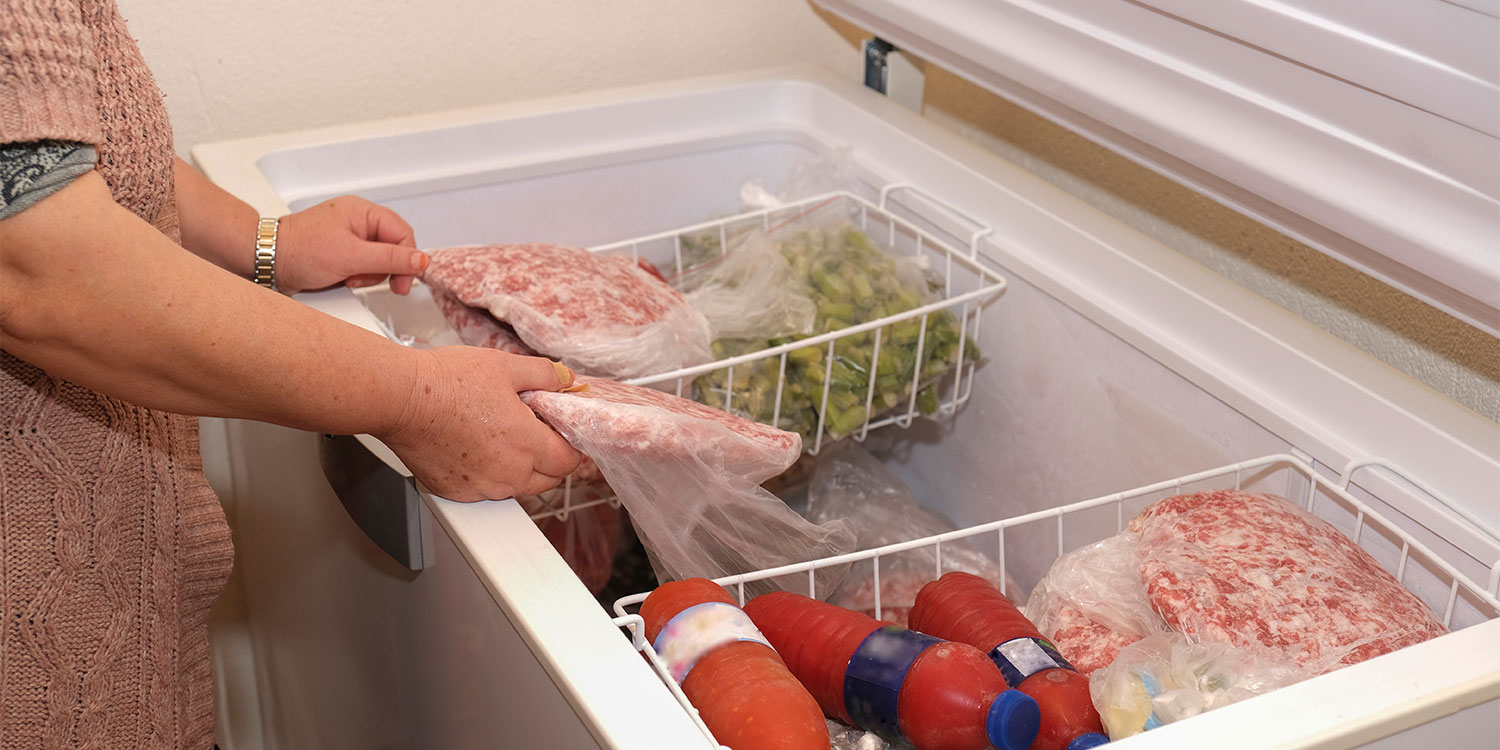
Fall outage — 22 hours, 54°F garage: Freezer packed full with frozen water bottles in all dead space. Cooler ambient meant the compressor cycled less frequently.
EcoFlow result: entire outage covered, 41% charge remaining. Jackery result: entire outage covered, 19% charge remaining.
Both passed again — but the Jackery was uncomfortably close to empty at 22 hours. A 30-hour outage would have been a different story.
👍 Pros and ⚠️ Cons
EcoFlow DELTA 3 Plus
👍 Pros:
- 7,200W surge handles any residential freezer without question
- Charges to 80% in 80 minutes — critical when storms come with short warning
- Expandable to 5kWh without replacing the unit
- App push notifications when battery drops below your threshold
- Handles multiple simultaneous loads without surge concerns
⚠️ Cons:
- 27.9 lbs — heavier than the Jackery, worth noting for mobility
- $999–$1,099 — $200 more than the Jackery
- Fan noise under heavy load is audible in a quiet room
- Some advanced scheduling features require the app
Jackery Explorer 1000 V2
👍 Pros:
- $799–$899 — meaningful price advantage
- 22 lbs — lighter and easier to move between locations
- 4,000+ cycle battery rating — slightly longer on paper
- Simple interface works without any app
- Proven reliability track record over several years in the market
⚠️ Cons:
- 2,000W surge — adequate for most chest freezers but limited headroom in heat
- 5+ hours to charge from a wall outlet — poor emergency readiness
- Not expandable — when your needs grow, you buy a new unit
- 1,500W continuous output limits simultaneous appliance combinations
🛠️ Which One Is Right for Your Setup?
Buy the EcoFlow DELTA 3 Plus if:
- Your storage space gets above 80°F in summer
- You want to run multiple appliances at the same time
- You might want to expand capacity later
- You sometimes forget to charge until a storm warning appears
- Your freezer is older than 10 years
Buy the Jackery Explorer 1000 V2 if:
- Your freezer is 7 cu. ft. or smaller and modern
- Your storage space stays cool year-round
- Budget is genuinely tight and $200 is a real difference
- You only need to protect one small freezer — nothing else
- Portability matters because you move the unit between locations
The $200 Question
The EcoFlow costs roughly $200 more than the Jackery. That gap is real and I am not going to pretend it does not matter.
Here is how I think about it.
The charging speed difference alone — 80 minutes versus 5+ hours — is worth more than $200 in a single event where a storm arrives faster than expected. A fully charged battery versus a half-charged battery during a 30-hour outage is the difference between protected food and a garage full of thawing meat.
But if your budget genuinely cannot stretch right now and your setup is simple — one small modern chest freezer, cool storage location, consistent charging habits — the Jackery is not a bad choice. It is a solid battery that will reliably protect a standard freezer.
It is just not the best choice if you have options.
— Ethan is a homeowner who began testing backup power systems after losing food during a prolonged power outage. He documents real-world results for households in regions with unreliable grids.
The Long Game: Which Battery Holds Its Value
One more consideration worth mentioning before you decide.
Both units use LiFePO4 battery chemistry, which is significantly more stable and longer-lasting than the lithium-ion chemistry in cheaper portable power stations. But the cycle life ratings differ: EcoFlow rates the DELTA 3 Plus at 3,000+ cycles, Jackery rates the 1000 V2 at 4,000+ cycles.
At one full charge cycle per week — a reasonable estimate if you do monthly maintenance cycles plus real outage use — that translates to roughly 57 years for the EcoFlow and 77 years for the Jackery. Both numbers are well beyond any realistic product lifespan. In practical terms, neither battery will degrade from cycle count before something else causes you to replace it.
The more relevant long-term factor is the EcoFlow’s expandability. If your needs grow — you add a second freezer, start working from home, buy a well pump — the EcoFlow accepts add-on battery modules that extend capacity to 5kWh without replacing the base unit. The Jackery requires a full replacement when your needs exceed its capacity.
Over a 10-year period, that expandability could be worth far more than the $200 price difference at purchase.
Check your LRA number first. Use the free calculator to confirm either unit meets your specific surge requirements. Then decide based on your actual setup — not marketing claims.
Last updated: Apr 2026