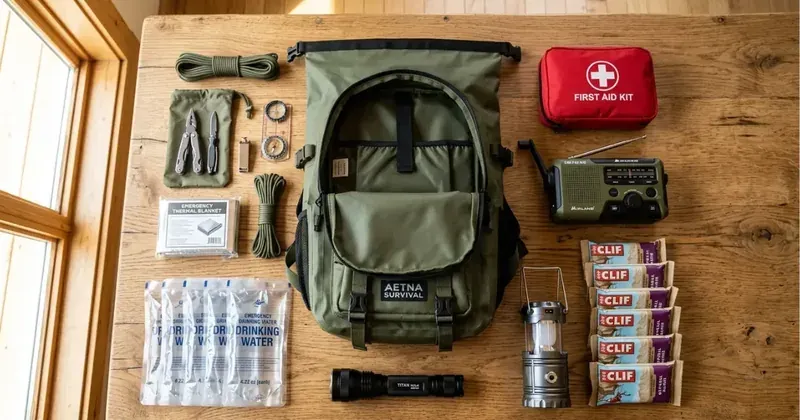
Best Emergency Kit for Power Outages 2026: What to Include
This post contains affiliate links. I earn a small commission if you buy through my links, at no extra cost to you. I only recommend gear I have researched in depth: manufacturer specifications, published teardowns, and aggregated owner reports.
The power just went out. Your fridge is warming. Your phone is at 12%. You have no flashlight, no water, and no plan.
That is the moment every emergency kit either earns its place or turns out to be a waste of shelf space. This guide covers what a good outage kit contains, which part most kits skip, and how to pair a kit with backup power.
This post contains affiliate links. We earn a small commission if you buy through our links, at no extra cost to you. Product details come from the manufacturer's listings, and we have not lab-tested any kit.
⚡ FIRST AID PICK
SurviveX First Aid Kits
The first aid layer of an outage kit, in sizes for 1-2, 3-4 and 5-6 people
Check SurviveX Kits →Why Many Emergency Kits Fall Short
Many boxed kits are built to look complete on a product page. They can include food bars nobody wants, weak flashlights, and first aid kits that are mostly adhesive bandages.
A useful test: what would you actually reach for at 2 AM with no power and no way to order anything new?
SurviveX discount: 10% off everything
Use code GETREADY10 at checkout
Plus free shipping on orders over $50
Code valid through 30 November 2026. Cannot be combined with other offers.
The 5 Things Every Outage Kit Needs
1. Light that lasts more than one night. Headlamps free your hands. Keep spare batteries or a rechargeable option.
2. Water you can drink. Store enough for each person for the whole outage, or add a reliable filter. See our emergency water storage guide.
3. Food your family will actually eat. Choose items that need no refrigeration or cooking, and rotate them before they expire.
4. Communication that does not depend on cell towers. A battery or hand-crank NOAA weather radio is worth having.
5. First aid that covers real injuries. Cuts, burns and sprains are the usual outage injuries, not wilderness scenarios.
Build or Buy?
Building your own kit lets you choose every item and often costs less, but takes time: sourcing each item, checking compatibility and tracking expiry dates. Buying a pre-assembled kit saves that time. A sensible middle path is to buy a proper first aid kit and build the rest (light, water, food, radio) yourself.
Where to keep it: inside, near the door you are most likely to use, with a smaller set in the car. Check it every six months: batteries, food and first aid expiry dates. Make sure everyone in the house knows where it is.
Pairing Your Kit With Backup Power
A kit covers the first days. For longer outages you need backup power for the fridge, phones and medical devices. A power station sized for your essentials is the usual answer; see our guide to the best solar generators for home backup.
If you only do one thing today, put the kit together. It covers the immediate risks of the first three days.
🩹 The Part of Outage Prep Most Kits Skip
Kit lists always cover water, food and light. Few address this: in a widespread storm, you cannot count on an ambulance.
During large storm events, emergency response times can stretch, roads can be blocked by debris, and hospitals can be overwhelmed. FEMA’s preparedness guidance assumes you may need to handle a wound, burn or sprain yourself for the first 24 to 72 hours.
That changes what belongs in the kit. Many drugstore first aid kits are mostly adhesive bandages. An outage calls for wound closure, bleeding control, burn treatment and a way to splint a sprain, because the usual injuries are cuts from broken glass, burns from candles and camp stoves, and falls in the dark.
Choosing by household size
SurviveX lists first aid kits sized by household. Prices below are from its listings at the time of writing and can change:
| Kit | Household | Price | Best for |
|---|---|---|---|
| Small First Aid Kit | 1-2 people | $54.99 | Apartments, car, go-bag |
| Large First Aid Kit | 3-4 people | $120.99 | Most households (250 components per the listing) |
| Large Pro | 5-6 people | $150.99 | Larger families (270 components per the listing) |
| Large Waterproof | 3-4 people | $150.99 | Flood-prone areas, boats, humid storage |
| Burn Care Kit | add-on | $31.99 | Candle and camp stove burns |
| Zip Stitch Wound Closure Kit | add-on | $34.99 | Cuts that might otherwise need stitches |
| Travel Medicine Kit | 1-2 people | $31.99 | Over-the-counter medications for travel and everyday emergencies |
The Large kit is a sensible default for most households. Per SurviveX, it includes Zip Stitch wound closures, trauma shears, hydrogel burn gel, a CPR mask and a conforming splint, in labeled compartments grouped by use. In a dark house with a bleeding hand, labels matter.
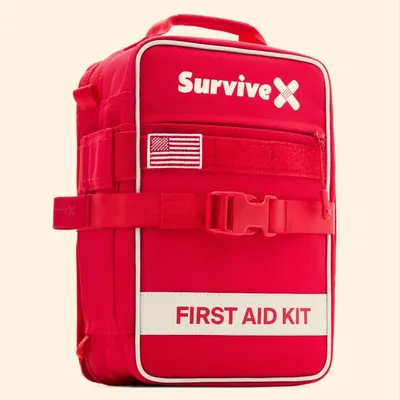
SurviveX Large First Aid Kit
3-4 people · 250 components · $120.99
The sensible default for most households. Labeled compartments by use case, which matters in a dark house.
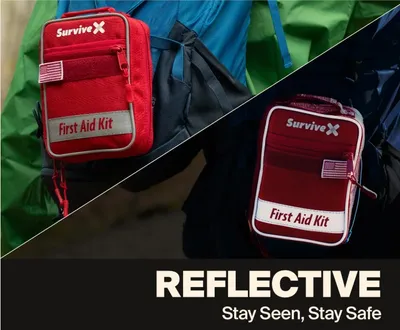
SurviveX Small First Aid Kit
1-2 people · $54.99
Right-sized for apartments, the car, or a go-bag.
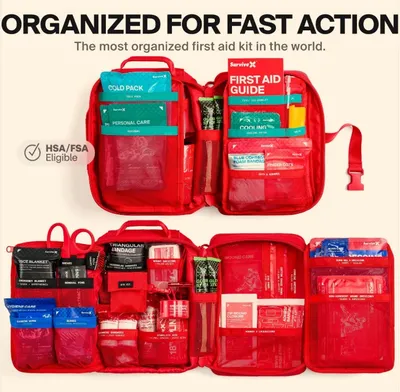
SurviveX Large Pro First Aid Kit
5-6 people · 270 components · $150.99
For larger families, with extra wound and burn supplies.
Two things worth knowing before you buy
FSA and HSA. SurviveX states that all of its first aid kits qualify for FSA and HSA spending. If you have FSA funds that expire on December 31, this can be a useful way to spend them. Check your plan’s rules.
Shipping and returns. SurviveX lists free shipping on orders over $50, free returns and a lifetime warranty, and says orders ship within 12 hours.
SurviveX first aid kits
Per SurviveX: designed in Falls Church, Virginia, every kit reviewed by an in-house former EMT, firefighter and search-and-rescue responder, FSA and HSA eligible, lifetime warranty, free returns, and orders shipped within 12 hours.
Large First Aid Kit, 3-4 people →
Small Kit, 1-2 people → · Large Pro, 5-6 people →
Use code GETREADY10 for 10% off. Free shipping over $50. Code valid through 30 November 2026.
The Final Word
A kit is only as good as its contents and whether you can find them in the dark. Cover light, water, food, radio and real first aid, keep it where you can reach it, and add backup power for anything longer than a few days.
🔋 72-Hour Power Outage Survival Kit — $27
Printable checklist + solar generator sizing guide + 7-day no-fridge meal plan.
Get the Kit — $27 →Last updated October 2026.